
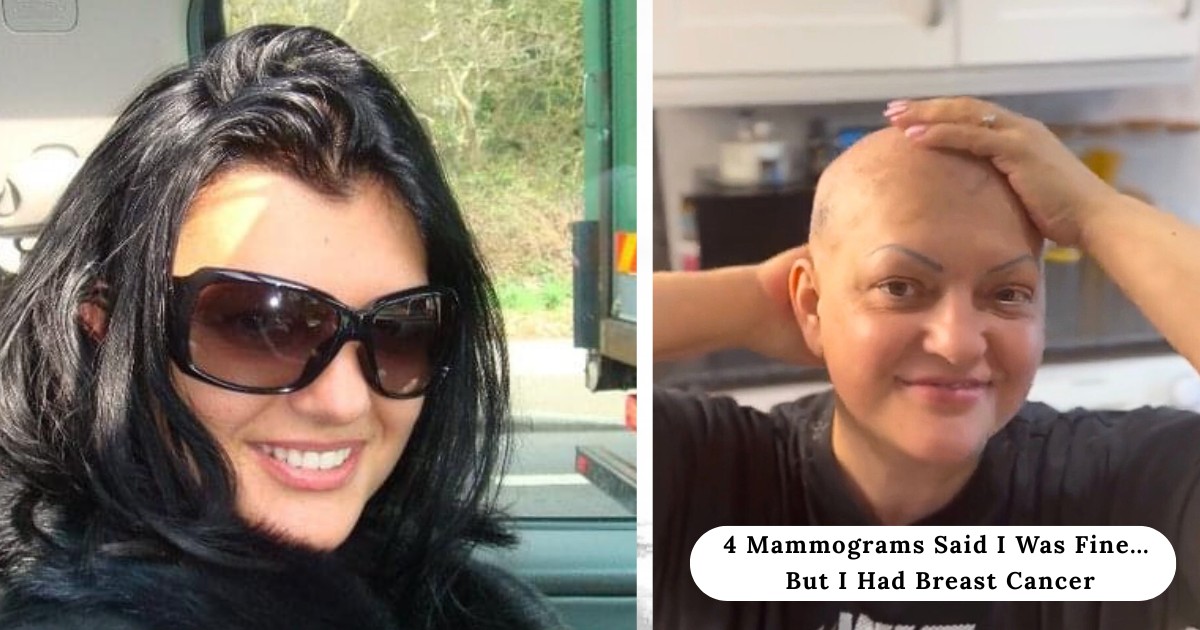
The True Story: Four Mammograms Said I Was Fine — But I Had Breast Cancer
Seven years ago I felt a small lump in my breast. The mammogram said everything was fine — but this is the true story of what really happened next.
One ordinary morning, while taking a shower, I felt a small lump in my breast. It wasn’t large, maybe not even half a centimeter, but something inside me immediately told me that I shouldn’t ignore it. I went to my GP, who referred me for a mammogram. A few days later the result arrived: according to the mammogram, everything was fine.
I tried to calm myself.
But deep down there was a quiet inner voice telling me that something wasn’t right.
Life moved on. We were planning to buy a house, work was busy, and everyday life took over. A year later I could still feel the lump. I went back to the doctor and had another mammogram. The result was negative again.
Over the following years I had another mammogram in London.
In total, I had three mammograms in London — and all three were negative.
But the lump in my breast continued to grow slowly.
My Body Was Sending Signals
As time passed, I started noticing small changes in my body.
My nails became ridged, and on one of them a thin dark line appeared that didn’t go away. A small black spot also appeared on one of my toes, which I assumed must have been caused by dropping something on it.
My skin also changed. It became rougher and drier, and when perfume or certain shower gels touched it, it immediately turned red and irritated.
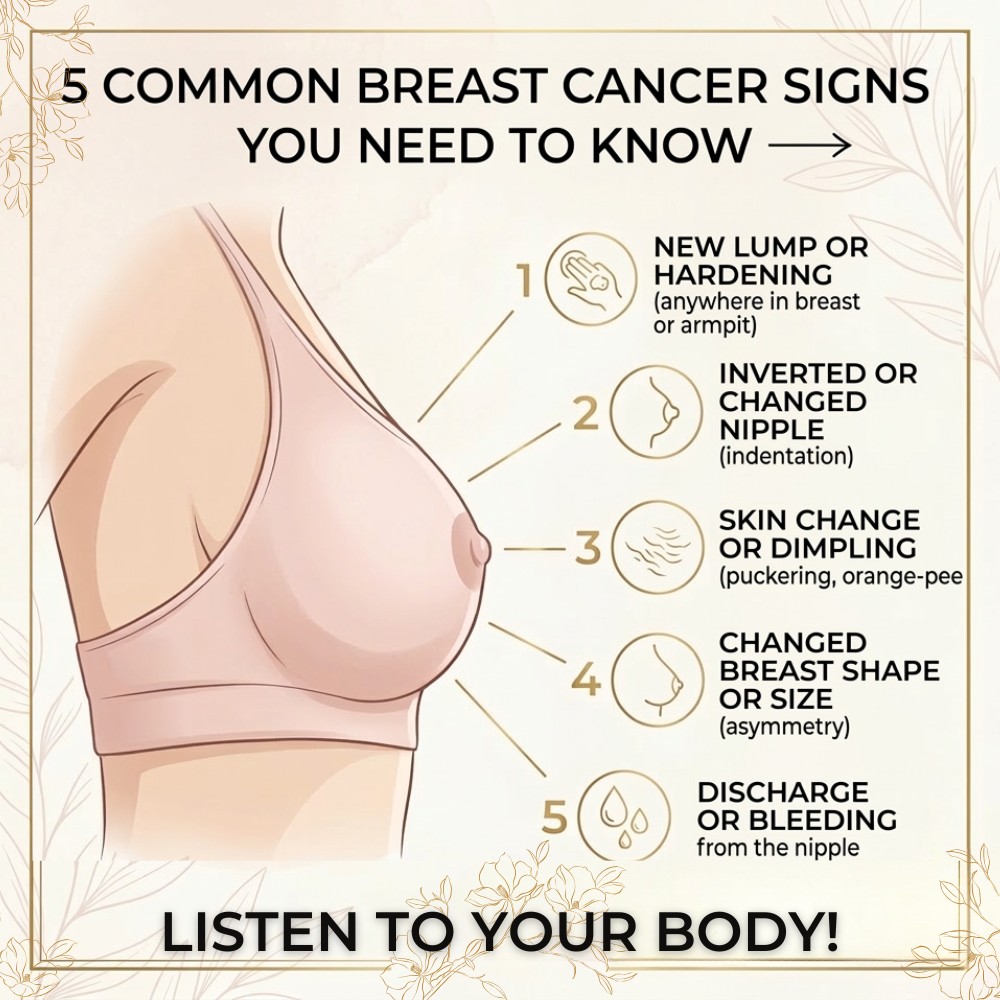
The skin on my breast also changed. In the area where the lump was located, the surface of the skin lost its firmness.
It became slightly ridged and developed a small indentation, almost as if the skin was being pulled inward from underneath.
My breathing also began to change. During longer walks or when walking faster,
I often felt short of breath. It felt as if my lungs were not working properly, and my breathing became strained and unusual.
Looking back now, these were warning signs.
At the time, however, I didn’t connect them.
Moving to Liverpool
After three years we moved from London to Liverpool. A new home, a new environment, and hopefully a new beginning.
When I met my new GP, I told them clearly that I had felt a lump growing in my breast for three years and that I wanted a thorough examination.
I was sent for another mammogram.
This was my fourth mammogram.
The result was negative again.
If my story had ended there, I might not be alive today.
But this time I insisted on further testing, which is how I ended up having an ultrasound.
The ultrasound examination lasted much longer than expected. The doctor examined not only my breast but also my underarm.
At that moment I felt that my fears were probably correct.
After the examination, the doctor sat down with me and said that it was very likely that I had a tumor, but before making a final diagnosis more tests were needed.
A biopsy, a CT scan, and an MRI.
The Diagnosis
After all the tests, the diagnosis became clear.
I had breast cancer.
It was not an aggressive type, but it had already spread to the lymph nodes and to the lungs. Two spots were found on my lungs.
The doctors recommended immediate treatment: chemotherapy, surgery, and radiation therapy.
Everything started within a week.
On December 1st, I was already sitting in the chemotherapy unit of Clatterbridge Cancer Centre in Liverpool, with a PICC line in my arm.
Chemotherapy
Chemotherapy was one of the hardest periods of my life.
At the beginning of the treatment I started using a cooling cap, which helps many patients keep their hair. I didn’t start using it because I was vain.
I used it because I wanted to protect my children. We had just moved away from London, and they had already lost their friends, their school, and the familiar world they knew. I didn’t want them to have to face their mother suddenly changing as well.
Unfortunately, the cap didn’t work for me. I developed an ear infection and ended up in hospital, where my chemotherapy had to be temporarily stopped.
When I returned home and removed the cap the next day, I noticed that most of my hair had already detached from the roots.
I laughed and told my children: “Then let’s just shave it off.”
I didn’t only take my hair.
I lost all the hair on my body. Several toenails fell off, and the adhesive holding my dental prosthetics also failed. My hearing worsened and my vision deteriorated.
The soles of my feet often felt as if a thousand needles were piercing them. There were times when I could barely walk.
There were moments when blood seemed to come from almost every opening of my body.Sometimes I felt like I couldn’t go on.
But in my mind there was never a Plan B.There was only one plan: to survive.
By the end of chemotherapy the tumor had significantly shrunk, and during surgery the tumor was removed from my breast and all the lymph nodes from my right underarm were also removed.
Later it also turned out that the two spots found on my lungs were most likely remnants of a previous lung infection.
The Dilemma of Radiation Therapy
The biggest dilemma I faced was radiation therapy.
When the doctors explained the possible risks — damage to the heart, lungs, or even the vocal cords — my inner voice spoke again.
I felt that my body had already been through an enormous amount.
Chemotherapy had worked, the tumor had shrunk significantly, and surgery had removed the tumor and the lymph nodes.
Because of this, I ultimately decided not to undergo radiation therapy.
It is very important for me to say that this was my personal decision. It is not advice for anyone else. Every patient must make their own decisions together with their doctors.I am only sharing my story.
The Water Fasting Detour
After moving to Liverpool I had more time to research cancer symptoms and possible treatments. I read many articles online.
One of them talked about water fasting — the idea that if you drink only water and take vitamins for several days or even weeks, cancer cells cannot survive because they have no nutrients.
I tried it.
I fasted for 30 days.
I lost weight and became thinner, but looking back now it was clearly a mistake and a false path.
Water fasting did not destroy the cancer.
It is important to say this clearly:The Water Fasting Detour.
What Helped Me Get Through It
There were a few things that helped me during this difficult time.
Castor oil helped soothe my skin, support wound healing, and helped my hair grow back faster.
Socially, wearing a wig and headscarf helped me a lot. They allowed me to avoid the sympathetic looks people often give when they see a bald woman and immediately know it wasn’t her choice.
(The products I personally used can be found here:)
Sky Organics Organic Castor Oil for Hair, Lashes & Brows 100% Pure & Cold-Pressed
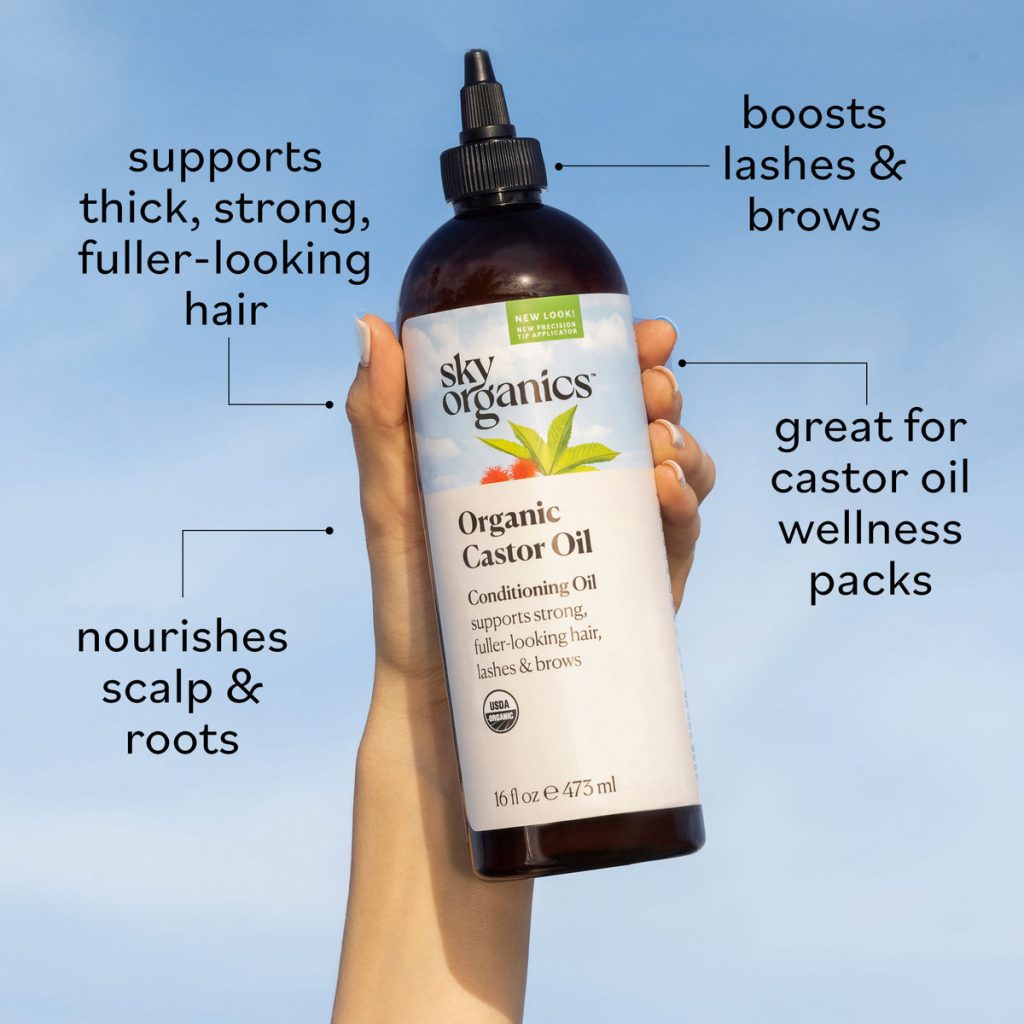
Cold-pressed organic castor oil is naturally rich in omega fatty acids and is often used to nourish the scalp, strengthen hair, and support fuller-looking hair, lashes, and brows. It can be applied to the scalp for about an hour or overnight before washing out, or used in small amounts on lashes and eyebrows with a clean brush. Many people also use castor oil to moisturize skin or gently massage sore muscles.
Short Brown Bob Wig with Fringe Bangs Natural Straight Hair

This short brown bob wig with soft fringe bangs is made from heat-resistant synthetic fiber that looks natural and is lightweight and comfortable to wear. The Kanekalon fibers allow gentle styling with heat tools under 150°C, and the wig is easy to wash and manage.
When my hair fell out during chemotherapy, I used this style for everyday wear. It was simple to handle and kept its shape well. During the year and a half while my hair was growing back, I bought about two of these wigs and they worked perfectly for me.
Deresina Pre-Tied Chemo Bandana for Women – Soft Bamboo Turban & Head Scarf for Hair Loss
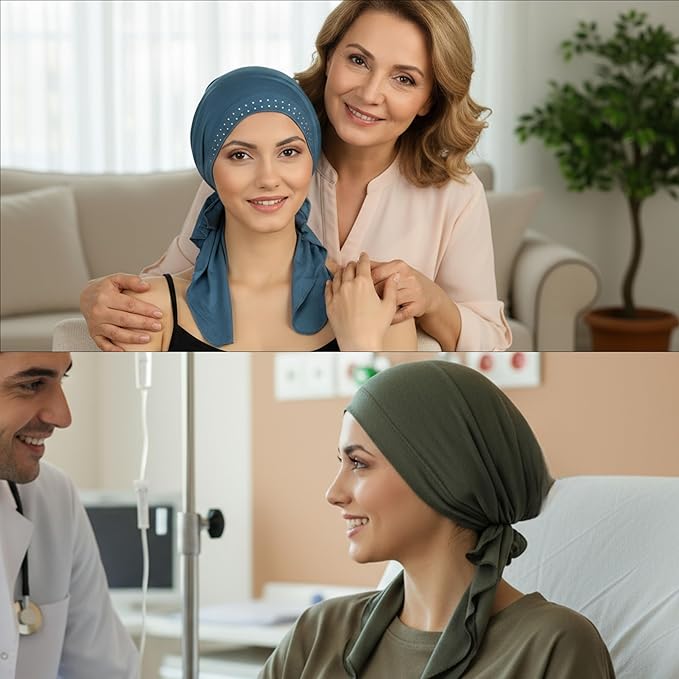
Designed with comfort and care in mind, this soft chemo headscarf is perfect for women experiencing hair loss.
The breathable bamboo–cotton fabric feels gentle on sensitive scalps while providing a lightweight, secure fit.
Just slip it on and enjoy effortless comfort and confidence throughout the day.
What I Learned
Most women believe that if they go for a mammogram and the result is negative, they can breathe a sigh of relief.
I believed that too.
But today I know that sometimes our bodies know the truth before machines do.
If you feel that something is wrong, do not let a negative test silence your instincts. Ask for further examinations. Ask for a second opinion.
And most importantly: listen to your inner voice.
Because if there is one thing I have learned in my life at the age of 55, it is this:
the greatest expert on my own body is ultimately me.
With love,
Erika D.
PS: If you have any questions about cancer, diagnosis, or my personal experience, you are welcome to reach out.You can find my email details on the Contact page of this website. I read every message personally and will do my best to reply within 48 hours.